Projects

A field record of shorelines, kept over time

These are installations as they were documented: what the coastline looked like before, what was placed in the water, and what the beach did afterwards. Dates are given as published; where a figure was never recorded it is marked [TBD].

One shoreline, followed across two decades

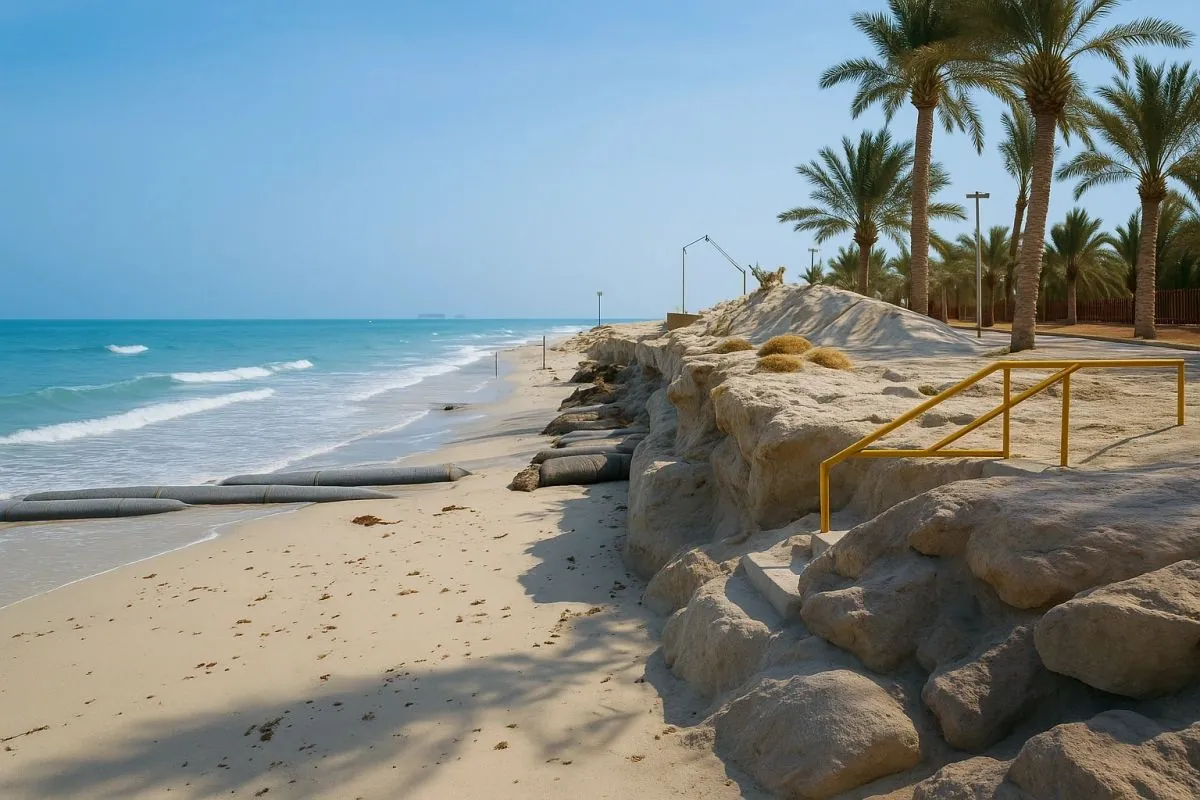
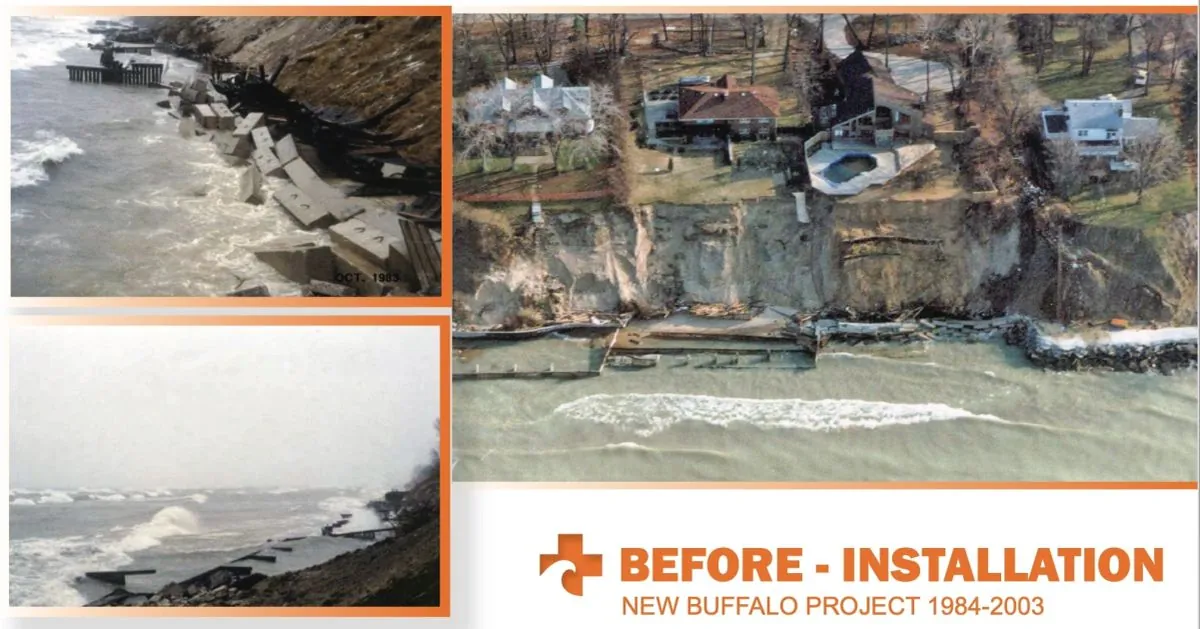
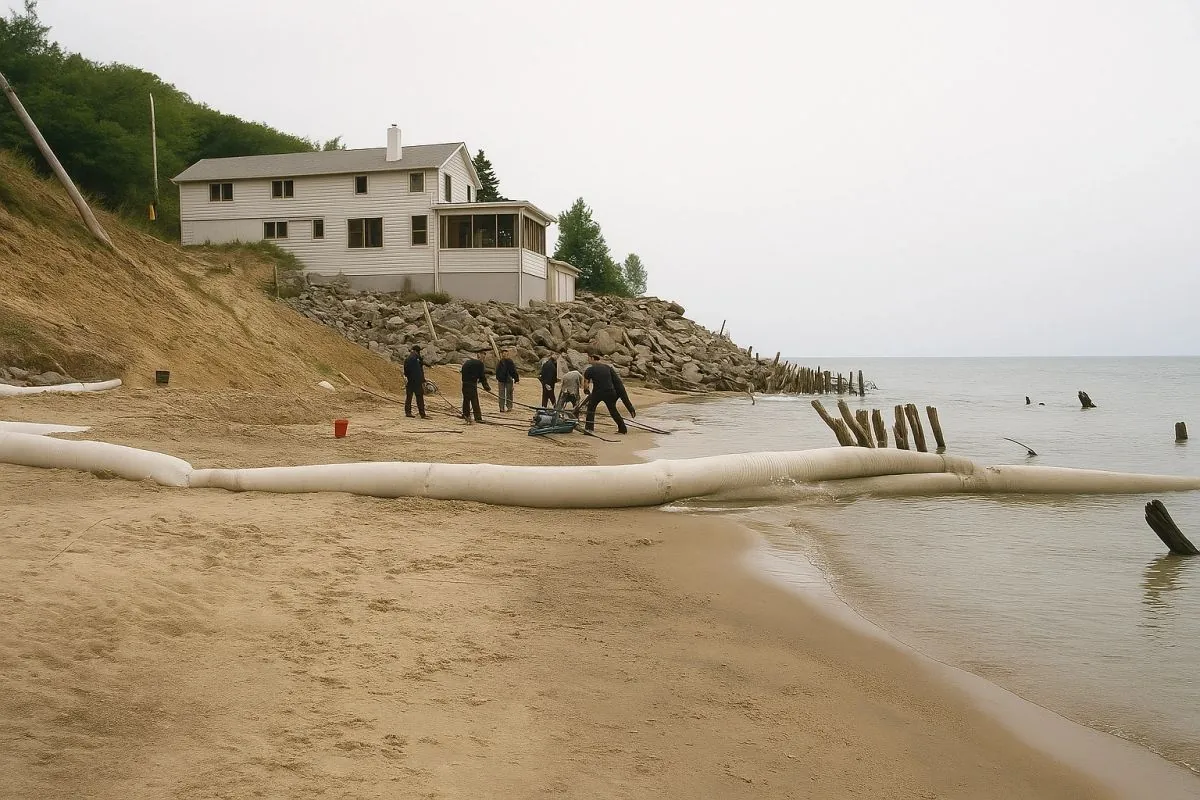
Early prototype installation — severely eroded shoreline, circa 2000

Early prototype installation — severely eroded shoreline, circa 2000

An early version of the beach recovery system was deployed on a coastline in severe retreat, driven by wave action, tidal currents and the absence of natural sediment replenishment.

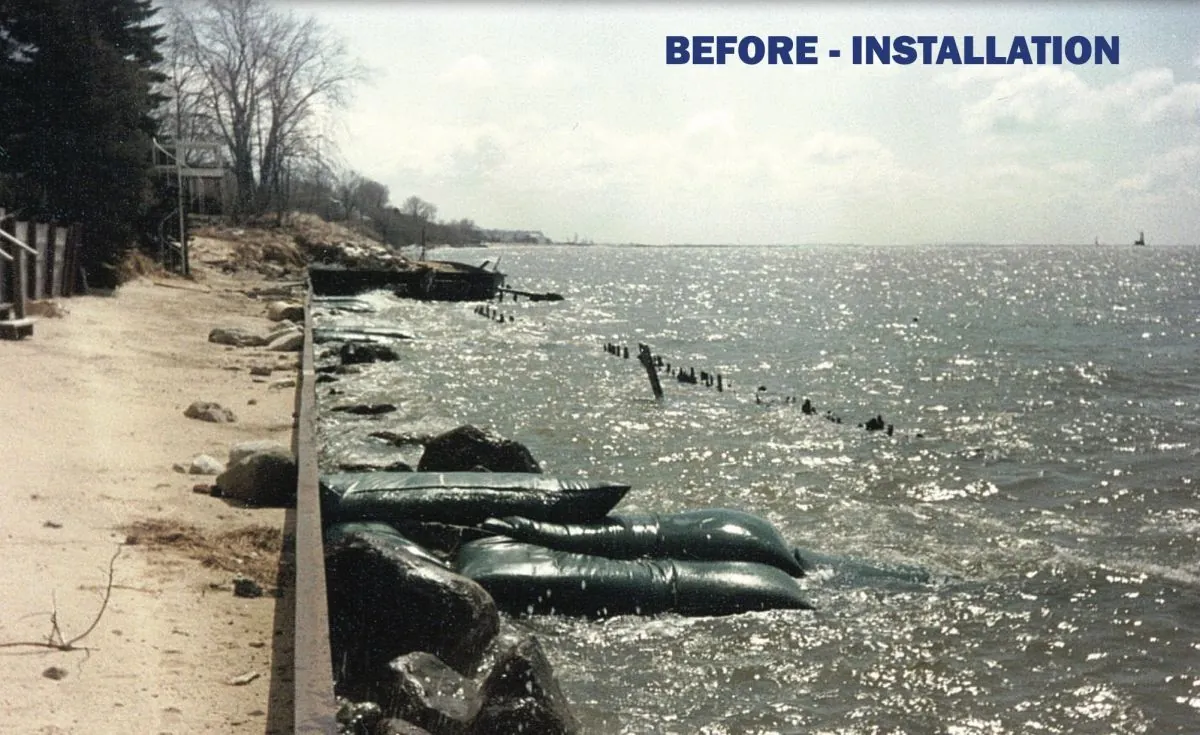
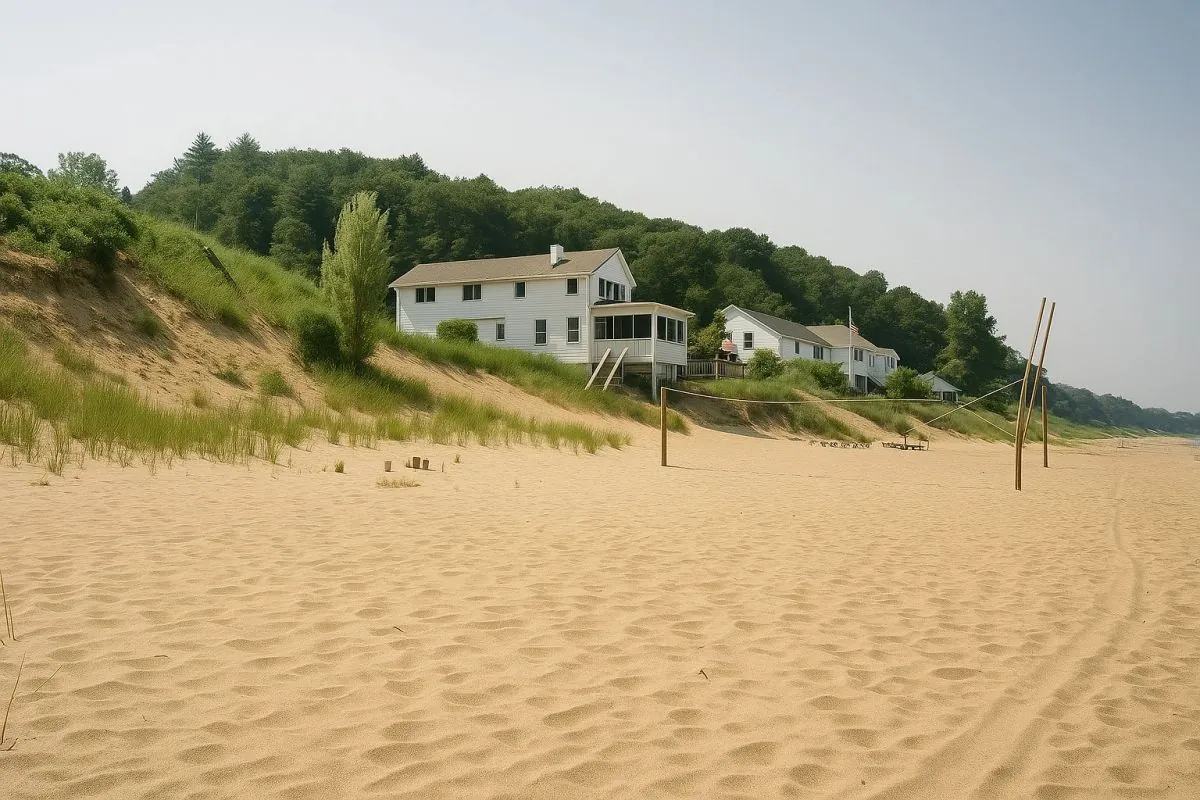
Successful shoreline stabilization, circa 2003

Successful shoreline stabilization, circa 2003

The pilot served as a proof of concept for geotextile containment structures designed to redirect wave energy and encourage deposition. Sand began accumulating naturally, tidal forces were moderated and beachfront areas stabilized.

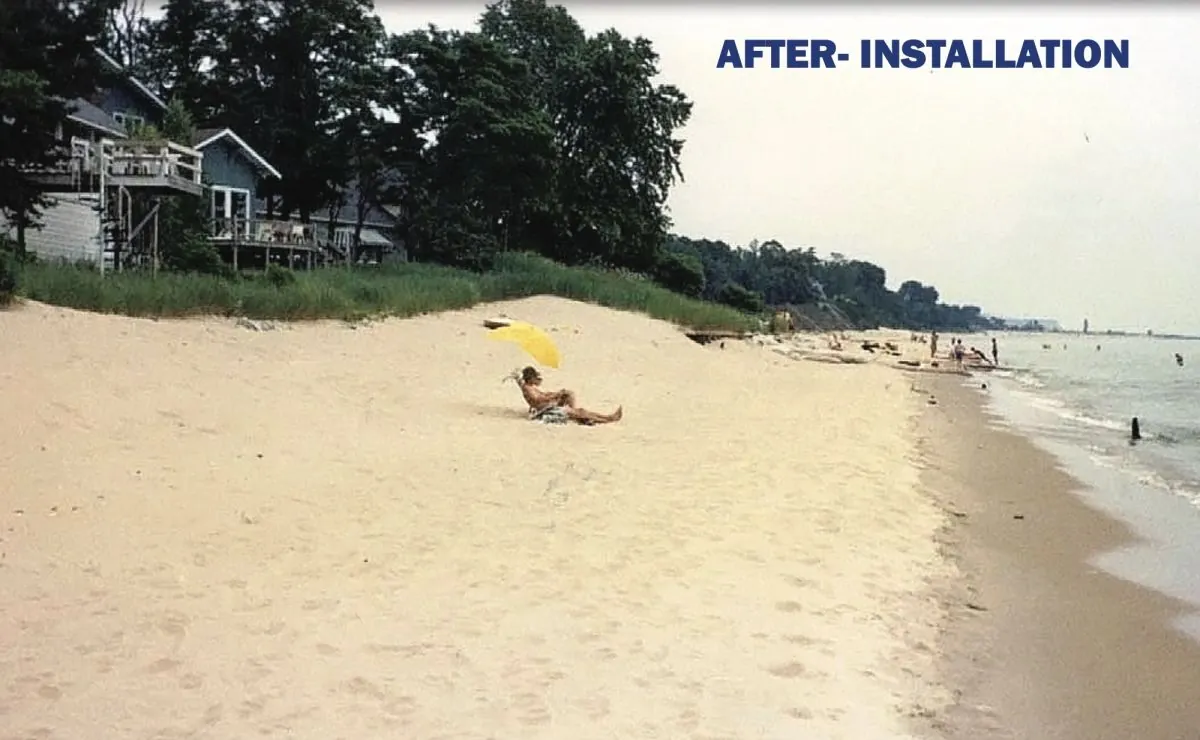
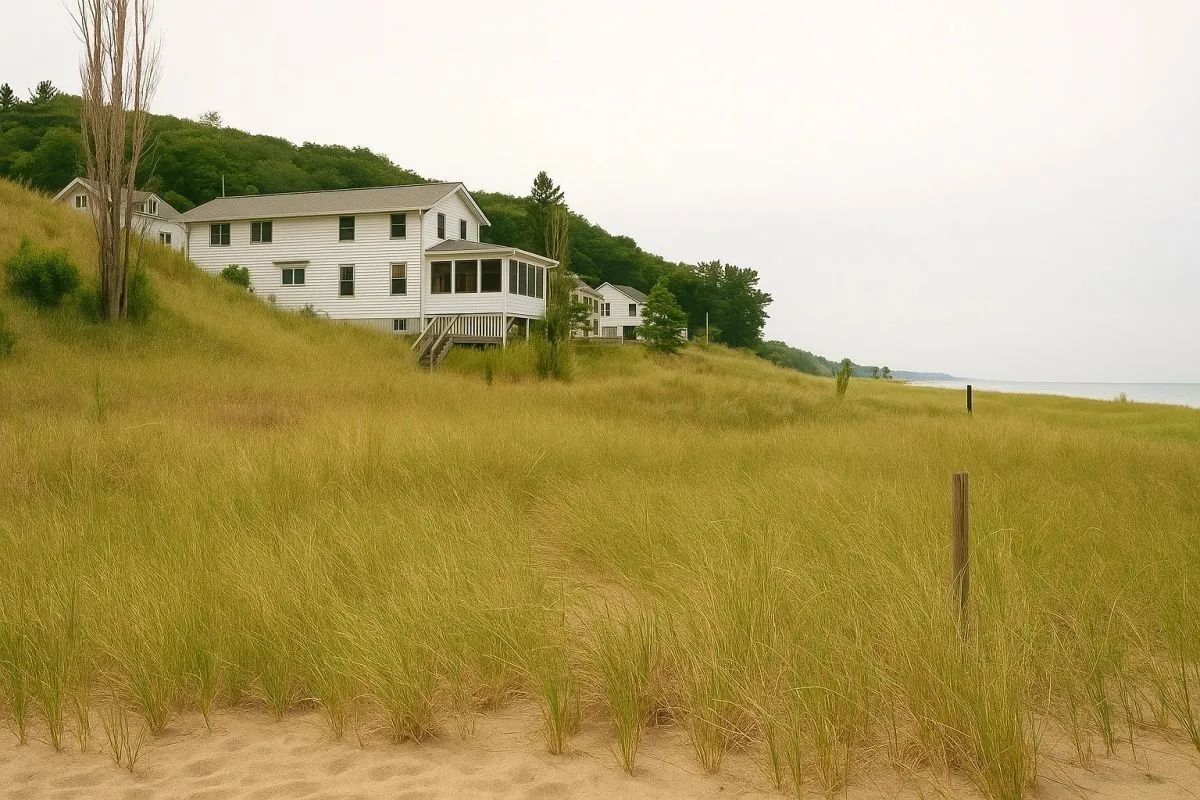
The longer in place, the greater the accretion, circa 2017

The longer in place, the greater the accretion, circa 2017

The deployment laid the foundation for the modern Beach Recovery System, showing that passive, nature-assisted infrastructure could restore a natural beach profile over time.

Named sites, before and after

Manistee, Michigan

Pre-installation, 1993After installation, 2000

Just north of the Federal Harbor in Manistee, the Coastal Accretion Engineering System sits in the water shortly after installation. Erosion was halted and the beach returned, providing a natural barrier protecting the Scotland Yard cottages.
Measured volumes for this site: [TBD]

Saudi Aramco site

Pre-installation, 1999One year after installation, 2000

Installation at the Saudi Aramco site was the first step toward restoring an eroded shoreline. One year later, natural sand had begun returning to previously eroded areas.

Measured volumes for this site: [TBD]

Michigan

Before installation, 1998After installation, 2000

The newly installed system is visibly capturing and retaining sand along the shoreline; two years later it had begun restoring the previously lost nearshore beach.

Measured volumes for this site: [TBD]

Documented Great Lakes case studies

Recorded in the Coastal Stabilization Proof of Concept package, with dated before-and-after photography for each site.

  • Grand Haven, Michigan

    Before June 1986 · After August 1999

    Federal harbour adjacent beach and dune restoration

    Six layers of failed seawall were removed before the recovery system was installed. The site is now a vegetated dune, and the undercurrent stabilizers that reversed the erosion are buried beneath the sand they captured.

  • Manistee, Michigan

    Before 19 December 1993 · After 11 August 1999

    State project north of the federal harbour

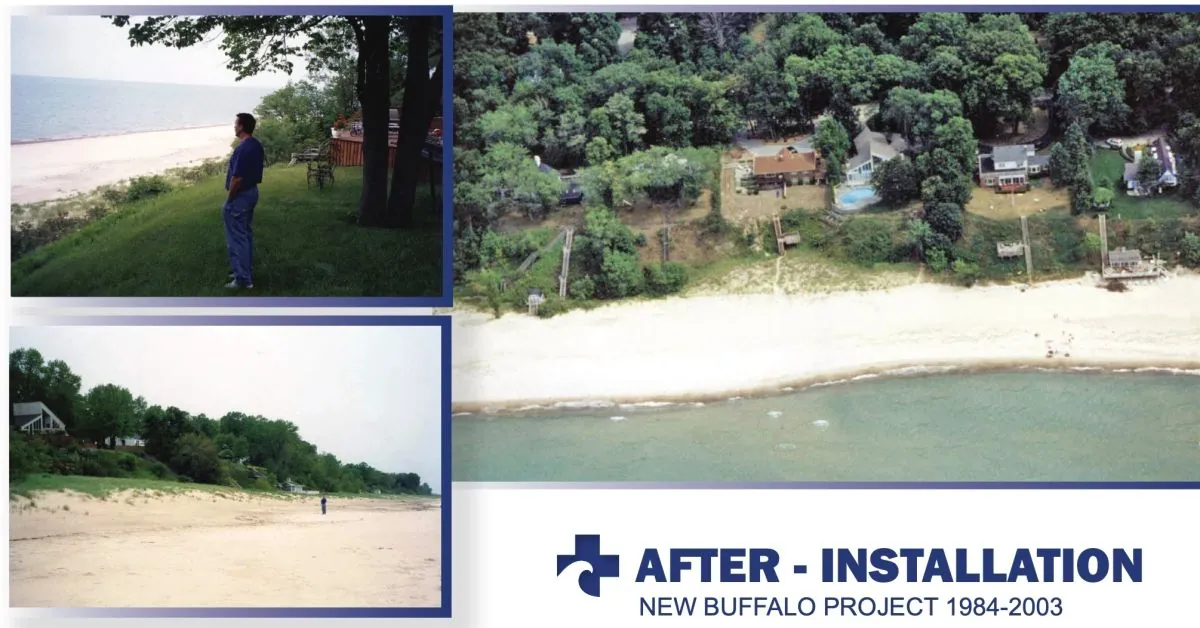
    Undercurrent stabilizers installed north of Scotland Yard Cottages. The project reversed beach erosion north of Orchard Beach State Park.

  • Lakeside, Michigan

    Before 1987 · After June 2000

    Aerial before-and-after documentation

    A narrow beach with limited dune width recovered to substantial beach widening and vegetative growth, with an improved dune and beach profile.

  • Muskegon County, Michigan

    Before November 1985 · After August 1999

    Meinert Park and Duck Lake, public beach and dune restoration

    Visible improvement in dune grass, beach width and shoreline condition. At Duck Lake, severe erosion beside a rock revetment was reversed after the stabilizer system was installed.

  • Douglas, Michigan

    Before and after, dates as recorded on site

    Vanderplas beach restoration, Lake Michigan

    Shoreline reinforced to reduce erosion and protect the bluff, restoring a stable, usable beach with improved access.

Read the full document

How the system works is set out on the Coastal Technology page, and the wider programme on What We Do.